Black Creek Is More Than a Headline

A reflection on community grief, youth safety, and why long-term investment in Black Creek matters
By Destin Bujang, MSW, RSW
Executive Director, Black Creek Youth Initiative | 4 min read
There are moments when words feel heavy, because what happened is not something you can simply respond to with a statement and move on.
The recent tragic incident at 15 Martha Eaton Way has shaken many people across our community. On behalf of the Black Creek Youth Initiative, I want to begin by extending my sincere condolences to the family, friends, and colleagues of the officer who lost his life. Any loss of life is painful. We hold his loved ones, his colleagues, and all those grieving in our thoughts.
I also want to acknowledge the residents of 15 Martha Eaton Way: the children, youth, families, seniors, frontline workers, building staff, and neighbours who woke up to fear, confusion, emergency vehicles, questions, and grief. For many people watching from outside, this may appear as another news story. But for the people who live there, this is not just a headline. This is home.
This is where children wait for the elevator on their way to school. This is where families carry groceries upstairs. This is where young people gather, laugh, argue, dream, and try to figure out who they are becoming. This is where elders sit, watch, remember, and hope that the next generation will have more peace than they did. When something traumatic happens in a building, it does not just affect one unit, one hallway, or one morning. It moves through the whole community.
At BCYI, we know that community trauma does not happen in isolation. It accumulates.
Young people may not always have the words to describe what they are feeling. Some will say they are fine. Some will laugh it off. Some will go quiet. Some will be angry. Some may say, “It’s just another day on the block,” and that sentence should stop all of us in our tracks. Because it should never become normal for young people to see tragedy, violence, emergency response, media cameras, and grief as just another part of growing up.
That kind of normalization is not resilience. It is survival.
Resilience is real in Black Creek. I see it every week. I see it in young people who still show up to program after difficult days. I see it in parents who keep pushing for their children. I see it in youth who look after their younger siblings, who help set up chairs before a session, who ask hard questions about racism, safety, school, grief, violence, and the future. I see it in the way young people make jokes, create art, play games, and find moments of joy even when the world around them feels uncertain.
But resilience cannot be the excuse for underinvestment.
Too often, communities like Black Creek are only seen when something tragic happens. The cameras come. The questions come. The assumptions come. People speak about the community as if it is only a site of violence, crisis, or concern. But Black Creek is more than that. Black Creek is a community of families, workers, students, newcomers, elders, artists, leaders, caregivers, and young people with enormous potential.
Our community deserves to be seen in its fullness.
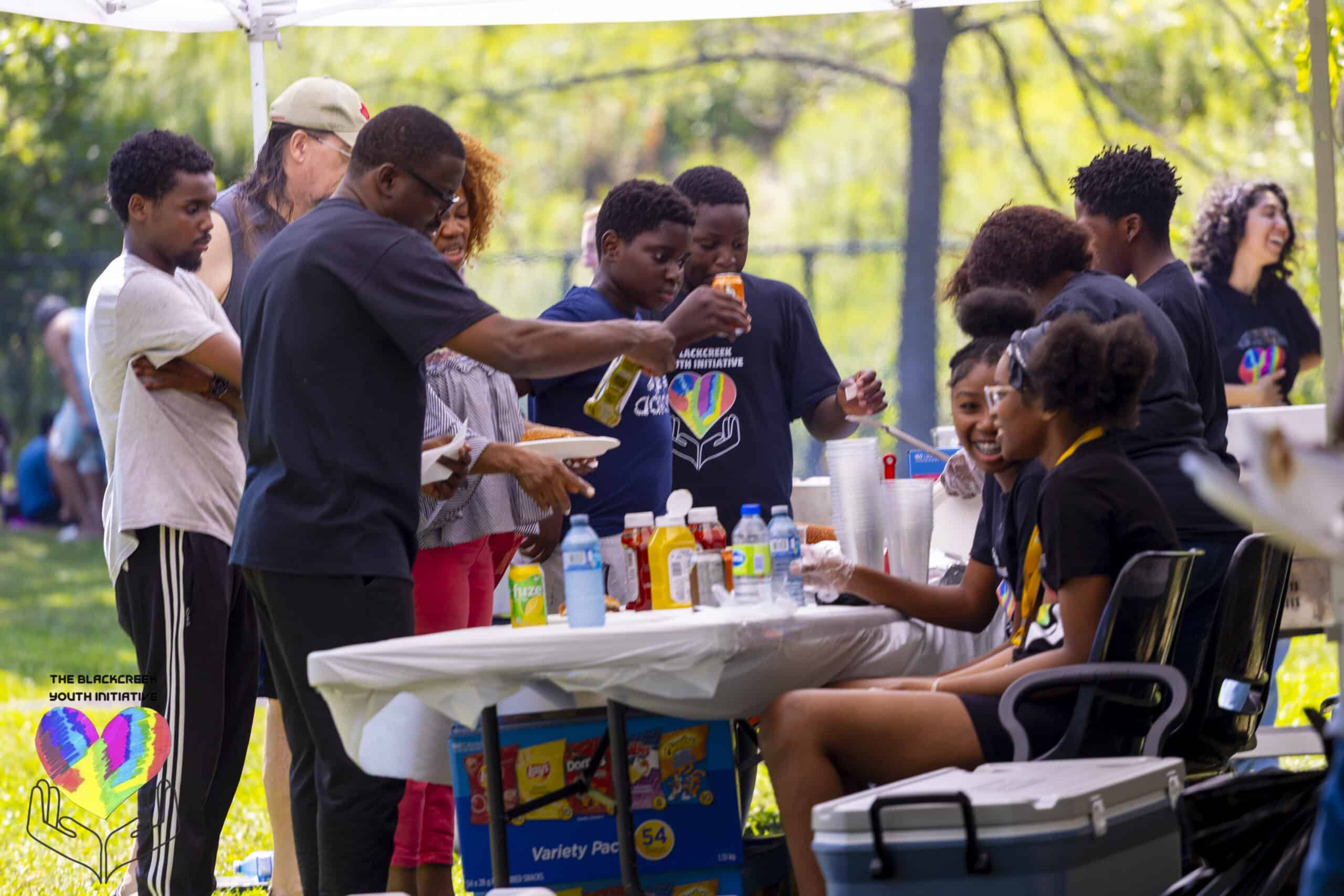
At the Black Creek Youth Initiative, our work is rooted in that understanding. We are not an organization that parachutes in when something happens. We are here. We work directly with youth and families. We operate close to where young people live, including apartment buildings and community spaces, because we know that support has to be accessible, familiar, and built on trust. Our model is simple, but powerful: proximity, consistency, relationships, and care.
We provide youth programming, mentorship, leadership development, violence prevention, safe spaces, referrals, and community-building supports. But more than that, we create spaces where young people can feel seen. Spaces where they are not treated as problems to be managed, but as people with ideas, emotions, gifts, questions, and futures.
And right now, the need is greater than our capacity.
That is the honest truth.
Youth are showing up. Families are reaching out. The need for safe, consistent, culturally grounded programming is growing. But our current staffing and space cannot always meet that demand. There are moments when young people cannot fit into the room. There are moments when we have to limit participation, not because the need is not there, but because the infrastructure has not caught up to the reality of what this community requires.
That is painful. Because when a young person shows up looking for connection, belonging, food, mentorship, safety, or simply somewhere to be, turning them away should never be acceptable as normal.
This is why safety cannot only be discussed after crisis happens.
Safety is not just emergency response. Safety is prevention. Safety is having trusted adults in the building before something goes wrong. Safety is having youth workers who know the young people by name. Safety is having a room large enough to welcome them. Safety is food on the table, a circle to talk in, a basketball game, an art activity, a referral when a family is struggling, a mentor who follows up, and a program that is still there next week.
Safety is also healing. And healing requires consistency.
In moments like this, we need compassion, not stigma. We need accurate information, not rumours. We need to remember that behind every headline are residents trying to continue with their lives. Children still have to go to school. Families still have to cook dinner. Youth still have to process what they saw, heard, or felt. Staff and frontline workers still have to show up. The community still has to breathe.
BCYI remains committed to doing our part. We will continue checking in with youth and families. We will continue creating spaces where young people can speak, sit in silence, ask questions, or simply be around people they trust. We will continue advocating for the supports our community deserves.
But this work cannot be carried by community organizations alone. We need partners, funders, institutions, property managers, governments, and community members to understand that long-term safety requires long-term investment. That means investing in staffing. It means investing in accessible program space. It means investing in youth programming, mental health support, violence prevention, community-led healing, and the everyday relationships that hold communities together before, during, and after crisis.
Black Creek is not just a place where tragedy happens. It is a place where people live, love, build, struggle, hope, and lead.
Black Creek does not need temporary attention. It needs sustained care, meaningful investment, and a commitment to the young people and families who call this community home.